

ECG Simulator
Interactive Medical Education Tool
ECG Simulator
An Interactive Medical Education Tool
What is the ECG Simulator?
The ECG Simulator is a powerful, browser based educational tool designed for healthcare students, professionals, and educators. It provides a dynamic and interactive platform for learning and mastering electrocardiogram interpretation. Users can generate, analyze, and interact with a wide variety of cardiac rhythms in a controlled, simulated environment. This ECG rhythm simulator offers a safe and effective way to develop critical clinical skills without the need for expensive hardware or patient access. It is an ideal ECG simulator online free resource for anyone looking to improve their cardiology knowledge.
Understanding the Electrocardiogram (ECG)
An electrocardiogram, or ECG, is a non invasive medical test that records the electrical activity of the heart. By placing electrodes on the skin, it captures the tiny electrical changes that occur during each heartbeat. The resulting tracing, a waveform, provides a wealth of information about the heart’s rate, rhythm, and overall health. Clinicians use the ECG to diagnose a wide range of cardiac conditions, from arrhythmias and ischemia to electrolyte imbalances and structural heart disease. It is a cornerstone of cardiovascular diagnostics and a fundamental skill for healthcare providers.
How the ECG Simulator Works
Our ECG simulator software uses a sophisticated mathematical model to generate realistic 12 lead ECG waveforms. It simulates the heart’s electrical conduction system to produce authentic representations of various cardiac rhythms. You can select a rhythm, such as Sinus Tachycardia or Atrial Fibrillation, and the simulator generates the corresponding electrical signals for all 12 standard leads. The simulation runs in real time, displaying the moving waveforms on a grid that mimics traditional ECG paper. This allows for a true to life experience, making it an exceptional ECG simulator app for training.
How-To Guide
Getting started with the ECG Simulator is simple. Follow these steps to begin your learning session:
- Select a Rhythm: Use the ‘Select Rhythm’ dropdown menu to choose the cardiac rhythm you wish to study. The rhythm information panel will provide a brief description.
- Adjust Parameters: Modify the heart rate and QRS amplitude using the sliders to see how these changes affect the ECG tracing.
- Choose Leads: Select which of the 12 leads you want to display on the canvas using the checkboxes.
- Control Playback: Use the ‘Play’ and ‘Pause’ buttons to start and stop the real time simulation.
- Annotate & Record: Click ‘Annotate & Record’ to start a 60 second recording session. During this time, you can pause the simulation to draw on the canvas with the pen tool or add text notes.
- Save Your Work: At the end of the 60 second recording, or by clicking ‘Stop and Save’, your annotated session will be saved as a video file for review.
- Reset: Use the ‘Reset’ button to return the simulator to its default state at any time.
Detailed Features
- Real-time 12-Lead Simulation: Generates all 12 standard ECG leads with accurate morphology and axis representation.
- Multiple Rhythms: Includes a library of common and critical rhythms, from Normal Sinus Rhythm to ST Elevation and Atrial Fibrillation.
- Interactive Controls: Adjust heart rate and QRS amplitude to instantly see their impact on the ECG.
- Annotation Tools: During recording, pause the simulation to draw freehand with a pen tool or add movable text annotations directly onto the waveform.
- Video Recording: Capture a 60 second strip, complete with your annotations, and save it as a video file for presentations, assignments, or personal review. This makes it more than just an ECG simulator game; it’s a creative learning tool.
- Measurement Calipers: A digital tool to measure time intervals on the ECG, such as the PR or QRS interval, to help with detailed analysis.
- Lead Selector: Customize the display by choosing which leads are visible, allowing you to focus on specific areas of interest.
Tips and Suggestions
To get the most out of this 6 second ECG simulator online tool, try to simulate clinical scenarios. For example, select ‘ST Elevation’, imagine a patient with chest pain, and practice identifying the affected leads. Use the annotation tools to mark the ST segments and save a recording to discuss with peers or instructors. This practice reinforces clinical reasoning and pattern recognition.
Another tip is to use the calipers to measure intervals for different rhythms. For instance, measure the PR interval in ‘1st Degree AV Block’ and compare it to ‘Normal Sinus Rhythm’. This hands on measurement solidifies understanding of the diagnostic criteria for various conditions.
The Educational Advantage
The ECG Simulator is built on the principle of active learning. Instead of passively reviewing static ECG strips, this tool engages you in the process. By manipulating variables and seeing the immediate outcomes, you build a deeper, more intuitive understanding of cardiac electrophysiology. The ability to record and annotate your findings transforms learning into a creative and analytical exercise. This approach fosters the critical thinking skills necessary for competent ECG interpretation in a clinical setting. The low ECG simulator price, being free, makes these benefits accessible to all.
Frequently Asked Questions (FAQ)
Q: How do I know which rhythm to select?
A: Each rhythm in the dropdown menu represents a common or important cardiac condition. The information box below the controls provides a short description of the selected rhythm. If you are new to ECGs, starting with ‘Normal Sinus Rhythm’ is a great way to understand the baseline waveform before exploring abnormalities.
Q: Why do my annotations seem to disappear when I change the visible leads?
A: Annotations are tied to the specific lead they are drawn on. If you hide a lead, any annotations on it will also be hidden. They are not lost; simply make the lead visible again, and your annotations will reappear. This ensures that your notes always correspond to the correct part of the ECG.
Q: Can I use this ECG simulator app free of charge?
A: Yes, this tool is completely free to use in your web browser. There is no charge and no need to download any ECG simulator software. It is designed to be an accessible educational resource for everyone.
Explore More Tools
If you found this ECG rhythm simulator helpful, we invite you to explore our other healthcare and educational tools. We are dedicated to creating high quality resources for medical learning.
- Visit our main health tools portal at Health Tools for a complete list of our applications.
- Check out our collection of medical dose calculators at Dose Calculators for practice in medication calculations.
References
The waveform morphologies and rhythm characteristics generated by this simulator are based on established principles of cardiac electrophysiology and standards found in clinical cardiology literature. For further reading, we recommend consulting textbooks such as “Rapid Interpretation of EKG’s” by Dale Dubin and official guidelines from organizations like the American Heart Association (AHA).
You Might Also Like:
 Advanced Sleep Pattern Calculator & Analysis – Sleep Persona/Score
 Free Prescription Maker with Professional Custom Templates
 Doctor Business/Visiting Card Maker – Professional Templates
 Medical Disclaimer Generator – Generate 100+ Personalised Disclaimers
![[2025] Best Medical Citation Generator – Generate citations free!](https://medplore.com/wp-content/uploads/2025/05/medical-citation-generator-300x200.jpeg) [2025] Best Medical Citation Generator – Generate citations free!Medical Barcode And QR Code Scanner
[2025] Best Medical Citation Generator – Generate citations free!Medical Barcode And QR Code Scanner![Free Medication Label Generator [Pharmacist-Approved Templates]](https://medplore.com/wp-content/uploads/2025/05/pharmacy-label-generator-300x200.jpeg) Free Medication Label Generator [Pharmacist-Approved Templates]
Free Medication Label Generator [Pharmacist-Approved Templates]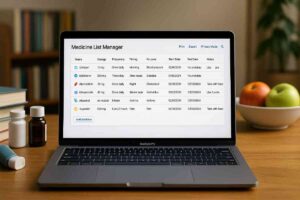 Ultimate Medicine List Manager – Color-Coded Medication Tracking
 Free Doctor Handwritten Prescription Reader Online
 Free Medical Report Generator – 15+ Doctor Report Templates
 Free Terminology Breakdown Tool – Medical Term Decoder
 MCG to MG Calculator for Doctors, Nurses and Educational Purposes
 mL to tsp (Teaspoon) with Spoon Visualiser – mL tsp Medicine Calculator
 Prescription Refill Calculator – Refill Date Calculation Made Easy
 Healthcare QR Code Solution for Clinics – Digital Prescription & Lab Results
 BMI Calculator for Women – Accurate Women BMI & Healthy Range by Age
 Professional IU ↔ mg/µg Calculator – Precise & Customizable
 Free Online EEG Signal Generator & Simulator
 Breast Cancer Risk Assessment Score – GAIL and Tyrer-Cuzick Model
 DICOM Viewer Online Free – Secure Medical Image Analysis Tool
 How Late Is My Period? Late Period Calculator Online Free
 400+ Professional Hospital & Clinic Name Ideas With Meaning
 Medical CC to ML, MG, TSP, OZ Converter With Syringe Visualization
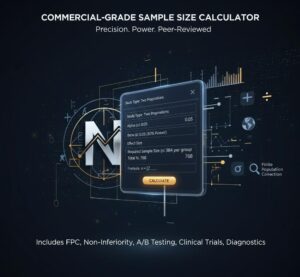 Professional Sample Size Calculator for Research & Clinical Trials
 Complete Fluid Ounce Converter – FL OZ to ML, Grams, Liters & More
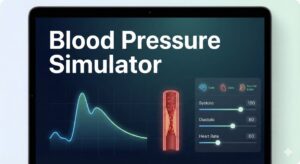 Free Blood Pressure Simulator Online – Visualize, Practice & Learn
 Pregnancy Conception Calculator – Find When You Likely Conceived
 Magnesium Deficiency Quiz – Assess Your Risk in 5 MinutesPill Identifier
 Advanced BMI Calculator
 How Much Water Should I Drink? Water Intake Calculator
 Free Pill Reminder Tool – Track Your Medicines & Get Alerts
 Pregnancy Due Date Calculator With Timeline And Trimester Tracker
 Free Ovulation & Fertility Tracker – Period Calendar With Reminders
 Medicine 3 Times a Day Calculator – Optimize Your Medication Schedule
 Calorie Calculator To Gain, Maintain and Lose Weight
 Nutritional Deficiency Calculator – Identify & Fix Your Nutrient Gaps
 Evidence-Based B12 Deficiency Assessment – Symptom Checker & Quiz
 MG to ML Syringe Calculator – Precise Dose Conversion Tool
 Medicine Time Calculator – Medication time scheduler
 Am I Zinc Deficient? Free Zinc Deficiency Test OnlineOnline Pill Reminder
 Calcium Deficiency Test – Free Online Quiz & Risk Calculator
 Are You Vitamin D Deficient? Ultimate Quiz & Assessment Tool 2025
 Am I Vitamin C Deficient – Assess Your Risk Instantly
 Are You Iron Deficient? Know Instantly Using Our Free Assessment Tool
 Am I Pregnant? – Pregnancy Probability Calculator
 Create Medical Appointments with WhatsApp + Calendar Invites (No App Needed)
 What Time Should I Take My Medicine in Another Country?
 Best Gut Health Check Quiz – Improve Your Gut Health Today
 All-In One Dose Calc Nursing – IV, Peds, BSA & Titration
 Free Medical Invoice Generator – Hospital Bill & Receipt Creator
![[FREE] Medicine Expiry Date Checker & Safety Scanner](https://medplore.com/wp-content/uploads/2025/04/medicine-expiry-checker-300x300.jpeg) [FREE] Medicine Expiry Date Checker & Safety Scanner
[FREE] Medicine Expiry Date Checker & Safety Scanner BSA Calculator – 5 Formulas, Chemotherapy, Cardiac & Burn Dosing